
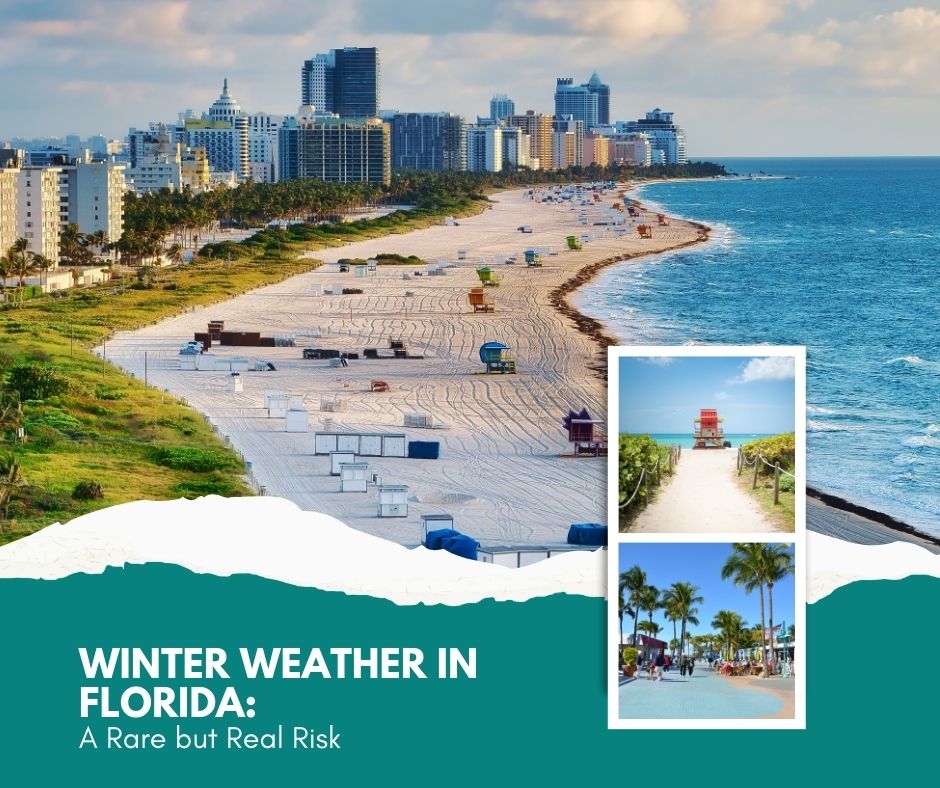
Florida is famous for its sunshine, mild winters, and beach-ready temperatures, but recent events like snow in some parts of the state are a reminder that even the Sunshine State isn’t immune to winter weather. While snow and freezing temperatures are rare, they can have serious consequences for homeowners. From burst pipes to damaged irrigation systems, the impact of a sudden cold snap can be costly, particularly for vacant homes or seasonal properties.
Most Florida homes are designed for warm weather, meaning they’re not fully equipped to handle freezing temperatures. This makes it essential for homeowners to take preventative measures to protect their properties and avoid expensive damage.
Why Florida Homes Are Vulnerable During Cold Snaps
Many Florida homes have vulnerabilities that can be exposed during unexpected winter weather:
- Exposed Plumbing: Pipes in attics, crawlspaces, and garages can freeze and burst when temperatures drop.
- Irrigation Systems: Outdoor sprinklers and pipes can crack if water is left in them during freezing weather.
- HVAC Systems: Heating systems may not be routinely maintained, leaving homes unprepared for cold conditions.
- Vacant Homes: Empty properties are particularly at risk, as no one is present to notice issues early.
Even a brief freeze can cause significant damage, and the cost of repairs often exceeds the effort and expense of preventative preparation.
Essential Winter Home Preparation Checklist for Florida Homeowners
Taking a few simple steps can help ensure your home is safe during cold events:
- Protect Pipes: Insulate exposed plumbing in attics, garages, and crawlspaces. Let faucets drip slightly during freezing temperatures to prevent pipes from bursting. If your home will be vacant, consider shutting off outdoor water lines.
- Maintain Your HVAC System: Schedule heating system maintenance and replace filters to ensure efficiency. Installing a smart thermostat allows you to monitor temperatures remotely and maintain at least 55°F in unoccupied homes.
- Seal Windows and Doors: Check for drafts and seal gaps to retain warmth. In areas prone to ice or high winds, temporary storm panels can add protection.
- Prepare Irrigation and Landscaping: Drain outdoor irrigation systems to prevent freezing. Protect delicate plants with covers or by moving them indoors. Trim tree branches that could break under ice or snow.
- Plan for Vacant Homes: Arrange for a trusted neighbor, friend, or property manager to check the property regularly. Remove outdoor furniture, hoses, and other items that could be damaged by freezing temperatures.
- Stock Emergency Supplies: Keep flashlights, batteries, basic tools, and a first aid kit available. Ensure smoke and carbon monoxide detectors are functional, and store non-perishable food and water in case a freeze disrupts utilities.
Conclusion
While Florida winters are generally mild, rare cold events like snow or freezing temperatures can pose serious risks to your home. Preparing your property in advance—especially if it’s vacant—can prevent costly repairs and provide peace of mind. By taking proactive steps such as protecting pipes, maintaining HVAC systems, and checking on vacant homes, Florida homeowners can safeguard their properties against unexpected winter weather.
Even in the Sunshine State, preparation is the key to keeping your home safe, functional, and ready for whatever the weather may bring.