
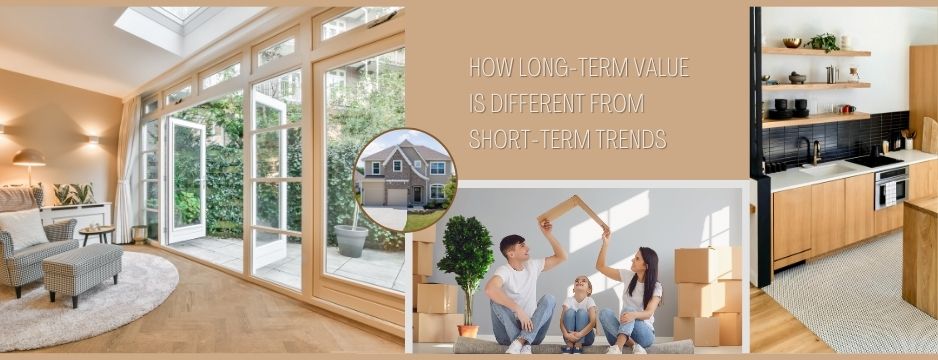
In real estate, it’s easy to get distracted by what’s popular right now. Design fads, viral home features, and market buzz can make certain upgrades or buying decisions feel urgent. However, what’s trendy today isn’t always what holds value tomorrow. Understanding the difference between long-term value and short-term trends can help buyers and sellers make smarter decisions that pay off over time.
What Short-Term Trends Really Are
Short-term trends are features or styles that gain rapid popularity but often fade just as quickly. These can include bold design choices, highly specific finishes, or features driven by social media rather than long-term demand. While trends can make a home feel modern and exciting, they don’t always appeal to future buyers.
Trendy upgrades may help a home stand out briefly, but they can also date a property faster. What feels fresh today may feel outdated in just a few years, requiring additional updates to stay competitive.
Long-Term Value Is About Durability and Demand
Long-term value focuses on features that consistently appeal to buyers, regardless of market cycles. These are elements that improve functionality, efficiency, and overall livability. Think practical layouts, quality construction, energy efficiency, and well-maintained systems.
Homes with strong long-term value tend to age better and remain desirable even as styles change. Buyers are often willing to pay more for homes that feel solid, flexible, and easy to maintain.
Why Buyers and Sellers Should Care
For buyers, chasing trends can lead to regret. A trendy feature might look great at first but become expensive or inconvenient later. Homes built around long-term value are easier to live in, easier to maintain, and often easier to resell.
For sellers, investing heavily in trends can be risky. Trend-based upgrades don’t always deliver a strong return, especially if buyer preferences shift. Improvements that enhance comfort, efficiency, and usability tend to attract a wider audience and support stronger resale value.
Market Conditions Change, Value Endures
Short-term trends often respond to current market conditions, such as interest rates, lifestyle shifts, or economic uncertainty. These factors change. Long-term value, on the other hand, is rooted in fundamentals that stay relevant.
Homes with good locations, thoughtful layouts, natural light, and practical spaces continue to perform well across different markets. These qualities don’t rely on hype or timing.
Balancing Style and Smart Decisions
This doesn’t mean trends should be ignored completely. Tasteful, subtle updates can help a home feel current without sacrificing long-term appeal. The key is balance. Choosing neutral finishes, classic materials, and flexible spaces allows homeowners to enjoy modern touches without locking themselves into a specific era.
When in doubt, it’s best to focus on improvements that enhance everyday living rather than following what’s trending online.
Long-Term Thinking Leads to Better Outcomes
Real estate is rarely a short game. Whether buying, selling, or improving a home, decisions made with long-term value in mind tend to produce better results. Trend-driven choices may offer quick excitement, but lasting value provides stability, confidence, and stronger returns.
Understanding this difference helps homeowners make choices that stand the test of time—not just the current market cycle.